August Wilson Endures as Shows 'Come and Go'
August Wilson’s Century Cycle is one of the great experiments in American drama: 10 plays about the Black experience, each set in a different decade of the 20th century. A revival of any of the works is worth celebrating, even if not every element succeeds.
The 1910s entry Joe Turner’s Come and Gone is back on Broadway, directed by Debbie Allen. Despite this pedigree, it only comes alive when certain characters are on stage.
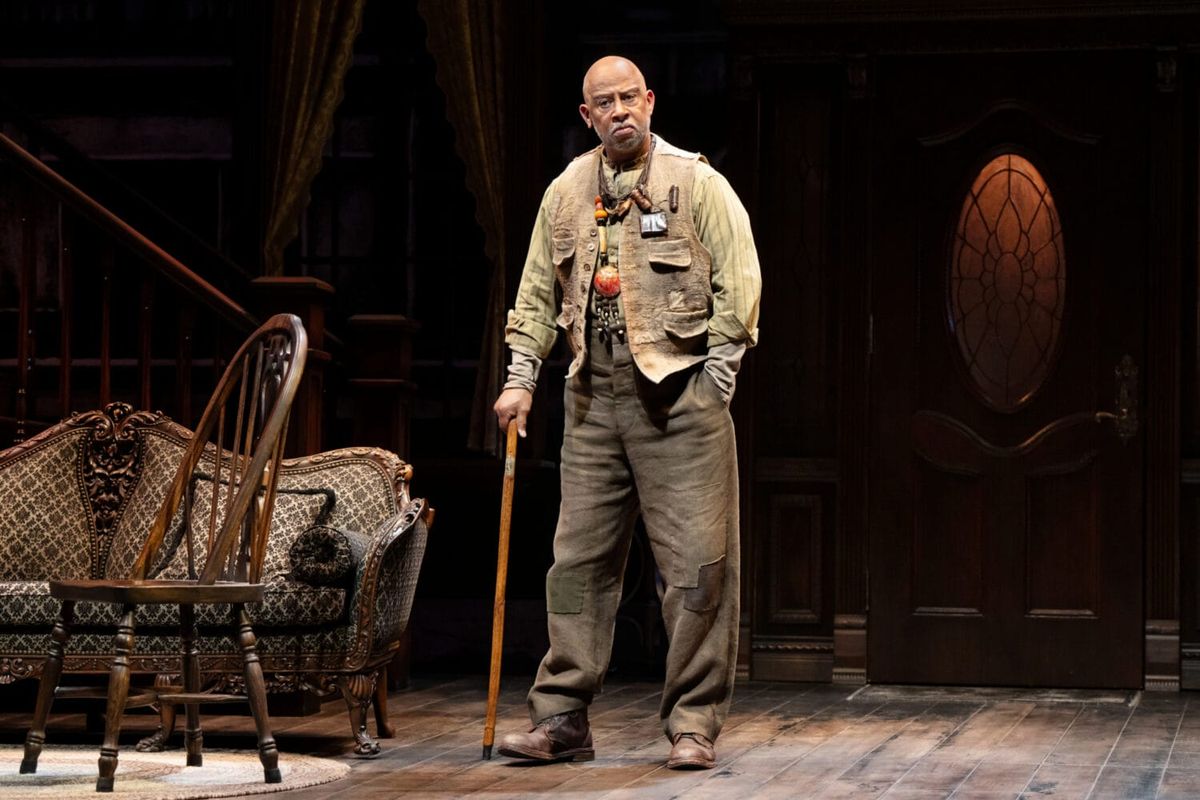
Set in 1911, the play takes place at a Pittsburgh boarding house run by Seth and Bertha Holly (Cedric the Entertainer and Taraji P. Henson). Residents come and go; Seth’s friend Bynum (Ruben Santiago-Hudson) is the one constant. Everything changes when the mysterious Herald Loomis (Joshua Boone) rents a room while looking for his wife.
Henson and Cedric are the names above the title and get the final bows. Unusually for a Wilson play, however, they serve mainly as comic relief. Bertha is a religious gossip, while Seth is a doubting grump.
The laughs are welcome; the phrase “It’s Tuesday, Mr. Loomis” shouldn’t be funny, but it is when Cedric says it. The problem is these characters are less impactful than the leads in other Wilson plays, like Troy and Rose Maxson in Fences or Boy Willie in The Piano Lesson.
Fortunately, the show really crackles when Herald and Bynum are onstage. Boone (a Tony nominee for The Outsiders) powerfully shows Herald’s torment, especially in the scenes that end each act.
Santiago-Hudson is the real highlight as Bynum. He has several tremendous monologues, all of which he knocks out of the park. A Tony nominee for this featured performance, Santiago-Hudson would be a worthy winner.
Of the six Century Cycle entries I’ve seen, Joe Turner is my least favorite. That’s the production’s fault, though, not August Wilson’s. The theatre world is better off when more people can see these plays.
At the Barrymore Theatre (where Joe Turner premiered in 1988) through July 26